

On the morning of 6 August 1945, the U.S. dropped nuclear weapons on Hiroshima and unleashed a catastrophe that haunts humanity even today. Hiroshima was levelled in an instant; tens of thousands died and tens of thousands more died slowly, in the weeks, months and years that followed, from burns and radiation sickness no one at the time knew how to treat. For the hibakusha, the survivors of Hiroshima and Nagasaki, 6 August is the day of remembrance of a haunting reality.
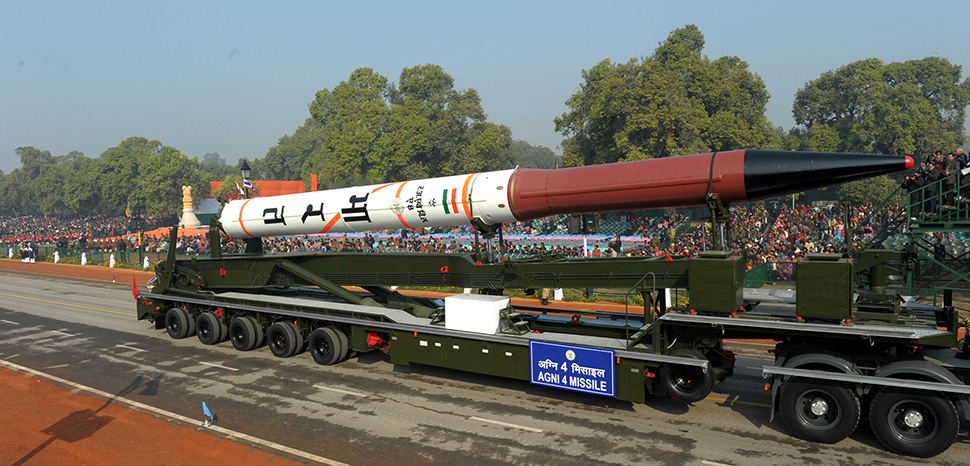
That is why India’s decision to test-fire its nuclear-capable Agni-IV ballistic missile on that same date is surprising. The test, conducted by India’s Strategic Forces Command, validated the missile’s operational capabilities and reinforced India’s strategic arsenal. Technically, it was another routine user trial of an established missile system. Symbolically, however, it was anything but routine, and was in callous disregard of a terrible moment of history.
The governments are cognizant of the fact that the dates announced for testing nuclear capable missiles communicate their capability and intention and also their intent regarding the utility of the weapons. Because of this summits, parades, sanctions packages, weapon test and commemorations are scheduled with such care – a date can say almost as much as the event itself. Firing a nuclear-capable missile on the anniversary of the first, and so far, only, use of an atomic weapon sends a negative message. The message it sends, to anyone watching from Hiroshima or Nagasaki, is not a good one.
Hiroshima Day exists to keep a specific memory alive: what nuclear weapons actually do to human beings. The survivors, most of them now elderly, have spent the better part of eighty years turning that memory into an argument for restraint and disarmament as they have witnessed the horrors of the use of nuclear weapons. In 2024, that decades-long advocacy was recognised with the Nobel Peace Prize for the Hibakusha community.
Set against that backdrop, parading a nuclear-capable missile on 6 August is not a neutral act. It pulls attention away from remembrance and toward raw military capability, on the one day set aside for the opposite. The signaling showcases irresponsible behavior and disregard to the memory of those affected.
The geopolitical environment today is further moving towards instability and increased risks of nuclear weapons. The Bulletin of Atomic Scientists, Doomsday Clock has been set to 85 seconds to midnight, closer than ever in history. This alone shows that the risks of nuclear use are far greater today than ever before. The world is arguably in its most unstable nuclear moment since the Cold War. Every major nuclear power is modernizing its arsenal. The New Start treaty, the last bilateral agreement between the United States and Russia has expired without any discussion regarding a new arms control treaty. NPT Revcon has failed to adapt a consensual document in its last three Review Conferences. Moreover, emerging and disruptive technologies have presented new challenges to nuclear stability. Artificial Intelligence, hypersonic weapons and ISR technologies are shrinking the time leaders have to make decisions in a crisis.
Signalling credibility is an important component of deterrence. However, there is a difference between signalling strength and signalling it carelessly. Choosing the anniversary of Hiroshima to demonstrate a missile’s range and accuracy risks making nuclear weapons feel routine, even casual, in public discourse. That is exactly the opposite of what decades of arms control have tried to achieve. Hence, the Agni-IV test’s timing raises an important question – whether India, and every other nuclear power watching, is willing to exercise the political judgement that responsible stewardship actually requires. Preserving the memory of Hiroshima is not sentimentality. It is one of the few things that has kept the world from a second atomic catastrophe for more than eight decades, and it deserves to be treated that way.

Mr Abdul Moiz Khan is Research Officer at the Center for International Strategic Studies (CISS), Islamabad.
