

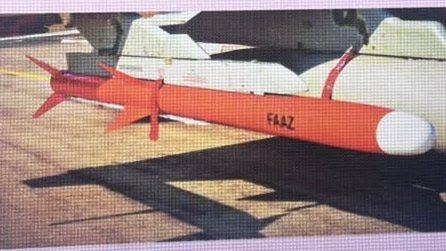
On 3 November 2026, Pakistan successfully tested its first indigenous beyond-visual-range (BVR), air-to-air missile launched from a JF-17 thunder fighter jet. The testing of the missile has been hailed as an important development because of the role played by BVR missile in the recent conflict with India in May 2025. This test is also part of broader conventional armament developments being undertaken by Pakistan over the past year.
According to reliable reports, the Fa’az missile has a range more than 100 km with more than 3.5 Mach speed. Moreover, the Fa’az missile has an Imaging Infrared (IIR) seeker that comes with certain benefits including more stealth, ability to avoid decoys, and more precision. The development of an indigenous BVR missile further enhances the ability of Pakistan to deploy a large number of missiles during any future conflict.
During the recent May 2025 crisis between India and Pakistan, BVR missile played an important role in the Pakistan’s Air Force kill chain. On the night of 6-7 May 2025, India launched Operation Sindoor against Pakistan. During the operation, India deployed approximately 72 fighter aircrafts to strike targets inside Pakistan. In response, Pakistan mobilized a fleet of 42 fighter jets to attack Indian aircrafts. During the ensuing fifty-minutes air battle – which was by some accounts the largest air battle between Pakistan Air Force (PAF) and Indian Air Force (IAF) – Pakistan was successful in striking down six Indian fighter aircrafts including advanced Rafale aircrafts. Islamabad’s success during this battle has been attributed to the kill-chain of Pakistan at the center of which was PL-15 BVR missiles used by the PAF. This success highlighted the increasing importance of BVR missiles in any future conflict between the two states.
Before the development of Fa’az BVR missile, Pakistan had to rely on imported air-to-air missiles from China and the United States. This had put a constraint on Pakistan’s ability to deploy a large number of BVR missiles during a future conflict with India because of the stockpile limitations. At this point, the development of BVR missiles by Pakistan would add another layer to the conventional capabilities of PAF.
Pakistan has tested Fa’az BVR missile from the JF-17 thunder aircraft that is co-developed with China. The fighter jet fleet of PAF comprises of F-16, Mirage-III, J-10CE, F-17 Thunder and F-7PG. Among these J-10CE is a Chinese fighter jet that deploys PL-15 BVR missiles. At the same time, F-16s are the US origin aircraft that deploy American-supplied AIM-120C-5 AMRAAM air-to-air BVR missiles. However, the largest number of fighter jets in Pakistan’s fleet are JF-17 thunder aircrafts – with the number quoted by IISS Military Balance at 175. The testing of Fa’az by JF-17 fighter jets highlight that their development would provide Pakistan with an indigenous kill-chain from fighter aircrafts to missiles. Also, this development provides Pakistan with a new layer of conventional capabilities in the air domain along with the J-10 CE and F-16 fighter aircrafts.
One major advantage of developing Fa’az BVR missile by Pakistan is also to enhance the export appeal of JF-17 thunder fighter jets. With an already equipped BVR missile, JF-17 would become a complete package fighter aircraft that would increase its sales to other countries. Pakistan has already exported JF-17 fighter jets to three different countries including Myanmar, Nigeria, and Azerbaijan. The enhanced version of JF-17 as a complete package would further increase the export appeal of the fighter aircrafts and contributes to Pakistan’s defense exports. In short, the testing of indigenous air-to-air Fa’az BVR by PAF provides several advantages to Islamabad and is a critical milestone for its defense industry. An indigenous BVR would further enhance the production capability of Pakistan that can lead an increased stockpile of the missiles. Also, it would help Pakistan in adding another layer to its air battle capabilities alongside with J-10CE and F-16 fighter jets. Lastly, the missile would also boost the export capability of JF-17 fighter jets strengthening Pakistan’s defence export capabilities.

Mr Abdul Moiz Khan is Research Officer at the Center for International Strategic Studies (CISS), Islamabad.
