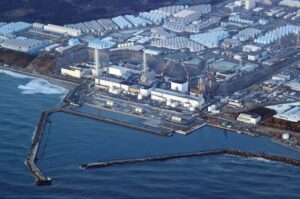




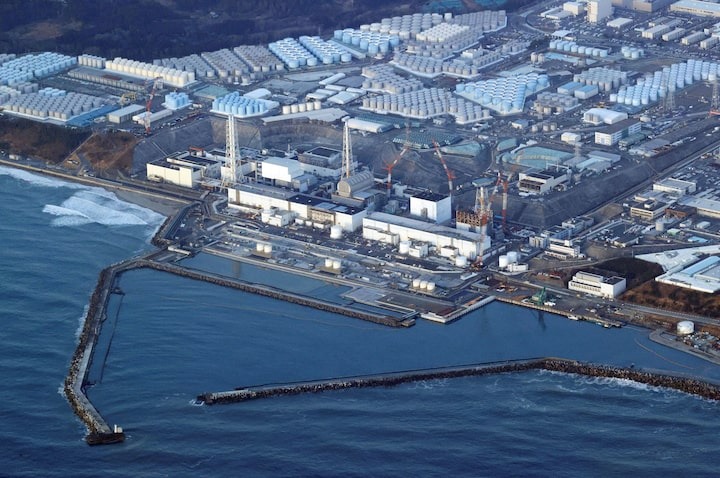
In March 2011, the Fukushima Daiichi nuclear disaster occurred after a massive earthquake and tsunami caused reactor meltdowns, hydrogen explosions, and radioactive leaks. Since the accident, Japan has been releasing Advanced Liquid Processing System (ALPS) treated water into the Pacific Ocean. China has been concerned about Japan’s release of treated Fukushima wastewater, potential environmental contamination and regional marine safety.
Recently, China and Japan reached an agreement on the discharge of nuclear-contaminated water from the Fukushima Daiichi nuclear power plant. However, scientists are still “not sure” about the impacts of the released water on different levels of analysis. Under the recent agreement, Japan has agreed that China will conduct independent sampling, monitoring, and inter-laboratory comparisons at critical stages of the discharge process. The International Atomic Energy Agency (IAEA) will also oversee the process of the water discharge. The Japan-China agreement demonstrates the importance of bilateral and multilateral cooperation in ensuring the safety and security of nuclear power plants, but it still does not provide a framework for mitigating the humanitarian impacts of the contaminated water as the impact of the release cannot be scientifically calculated.
Before the deal, on August 24, 2023, the Japanese government unilaterally started the discharge of nuclear-contaminated water from the Fukushima Power Station into the ocean. This water was used at Fukushima to cool overheating reactors after the 2011 Fukushima accident, becoming contaminated in the process. China was firmly opposed to this move and placed sea-food embargo on Japan. The IAEA found that the tritium levels of the released water are far below operational level. Despite this, China’s nuclear safety concerns regarding the water release remained unchanged. Later, following IAEA’s efforts, China and Japan signed the deal and lifted all bans placed on each other.
Japan’s nuclear safety standards have always been under question by the international community. Japan is a party to the Joint Convention on the Safety of Spent Fuel Management and on the Safety of Radioactive Waste Management. Article 13 of this joint convention states that even in siting any disposal or storage facility, each Contracting Party shall take the appropriate steps to ensure that such facilities shall not have unacceptable effects on other Contracting Parties by being sited in accordance with the IAEA’s general safety requirements. Japan’s water release disrespects this article of the joint convention when the country released the water into the ocean that is shared by other states who will also face the impacts of the released contaminated water.
Similarly, before Fukushima Daiichi accident 2011, Japan ratified the Convention on Nuclear Safety (CNS). However, Japan failed to fully meet the convention’s requirements for licensing, rulemaking, and oversight – particularly those outlined in Article 8, which addresses regulatory independence, and Article 17, which covers safe siting practices for nuclear facilities. These shortcomings ultimately left Japan unprepared for a nuclear crisis triggered by a natural disaster. In the aftermath of the Fukushima incident, Russia and Switzerland advocated for mandatory IAEA peer reviews and adherence to international safety standards. The IAEA, as the convention’s depositary, supported these proposals. However, key nuclear power-producing nations, including China, India, and the United States, opposed these changes, viewing them as infringements on national sovereignty.
In the current scenario, even though the IAEA has declared the released water to have low tritium levels but it is still not stated to be “safe”. The reason why Japan is disposing it off into the ocean is because of the contamination. Where general waste disposal into the ocean is not appreciated, there should be a clear disapproval by the IAEA and the international community for nuclear waste to be disposed off in the ocean. Just as minerals are carried away by ocean waves and travel from one part to the other, nuclear waste can also travel and contaminate water anywhere in the ocean which will make it impossible to detect or remove the contamination later on.
The challenge with radionuclides (such as tritium) is that they present a question that science cannot fully answer; that is, at very low levels of exposure, what can be counted as ‘safe’? Furthermore, there is an inadequate radiological, ecological impact assessment that is very concerning that the world would not only be unable to detect what is getting into the water, sediment and organisms, but if it does, there is no recourse to remove it.
What can be done?
Japan needs to revisit its nuclear safety policy and make required amends. Japan is a signatory to Joint Convention on the Safety of Spent Fuel Management and on the Safety of Radioactive Waste Management and is violating its Article 13. Japan needs to adhere to all articles of the convention and sign Revised Supplementary Agreements Concerning the Provision of Technical Assistance by the IAEA (RSA) to get assistance from the IAEA.
The IAEA should assist member states including Japan to manufacture and operate deep geological repositories (DGRs) for High-Level Radioactive Waste (HLW). There are currently no operating geological repositories for HLW, including spent nuclear fuel and contaminated water.
Furthermore, Japan needs to adhere to CNS, CPPNM, A/CPPNM and all related agreements or conventions in its full form to prevent any nuclear safety hazard.
Japan’s Nuclear Regulatory Authority (NRA) and Tokyo Electric Power Company (TEPCO) need to prioritize assuring safe nuclear disposal and other essential nuclear safety standards before expanding its nuclear program. Japan can utilize old spent fuel and treated water in applications at newly operationalized nuclear power plants.
From the scientific perspective, every 12 to 18 months the spent fuel from pool is replaced with fresh fuel. So the released Fukushima treated water, after dilution, treatment and modification can be used as spent fuel at existing and new nuclear reactors. Scientific research needs to be conducted discovering this possibility. Treated water could potentially be used in the secondary cooling systems of a nuclear facility. These systems do not directly interact with the reactor core or primary coolant but instead provide cooling for ancillary equipment and support systems. However, even in secondary cooling systems, the water would need to meet strict purity and radioactivity standards to ensure there are no contamination risks to the environment or personnel.
Water is an effective radiation shield due to its high hydrogen content, which helps slow down and absorb neutrons and gamma rays. ALPS-treated water could be repurposed as a radiation shield in certain non-core areas of a nuclear facility, such as waste storage areas or experimental labs, where tritium contamination at low levels would not pose significant additional risks. By advancing its nuclear safety standards and addressing all possible nuclear safety concerns – specially related to the release of treated water – as a first priority, Japan can gain trust among other neighbouring states and the international community as a responsible nuclear power.