



The Confusion On 9 March 2022, Indian Air Force’s BrahMos supersonic cruise missile crashed in Mian Channu, approximately 124 km deep inside Pakistan. India described it as an “accidental launch” due to a “technical malfunction” and human error, dismissed three mid-level officers, and closed the matter after an internal inquiry.

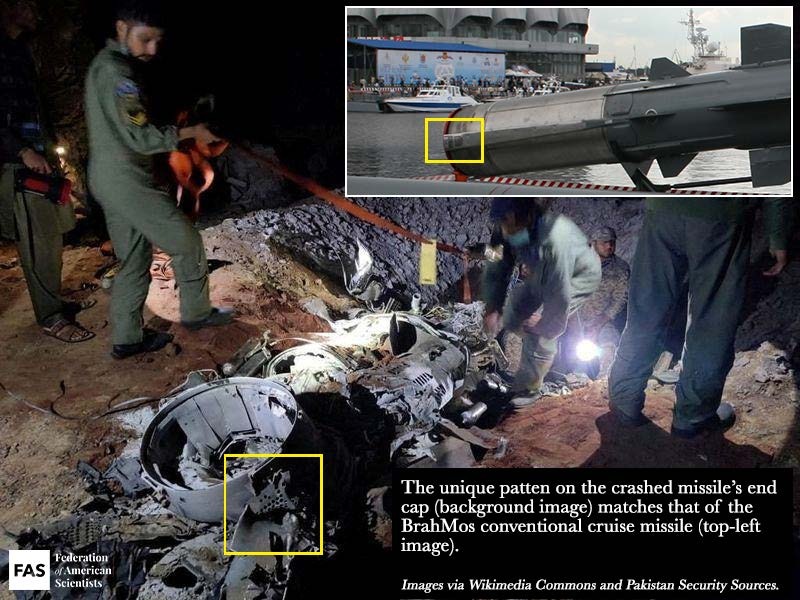

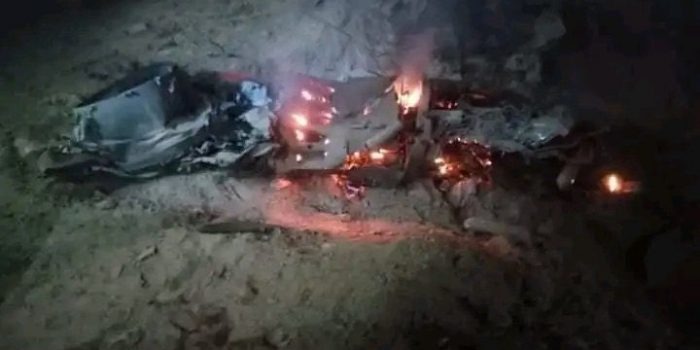
The episode was unprecedented: a nuclear-capable supersonic cruise missile had entered another nuclear-armed state’s territory in peacetime. It was the first known intrusion by a nuclear-capable missile into the territory of another nuclear-armed state. In 1983, former Soviet Union’s early warning system mistakenly detected a U.S. missile attack, but the celebrated Russian officer Stanislav Petrov averted a nuclear war by correctly identifying the false alarm. In 1995, Russia detected a Norwegian rocket launch and initially mistook it for an incoming U.S. missile, but the Russian forces de-alerted in time.
While Pakistan exercised notable restraint, summoning India’s envoy and calling for an international investigation, New Delhi’s limited accountability response and international complacency. For some, this “technical malfunction” explanation was unconvincing: as multiple analysts, including the Center for International Strategic Studies (CISS) and the Asia-Pacific Leadership Network (APLN) noted, BrahMos cannot be fired without layered safeguards, authorisations, and human–machine checks. The 2022 incident was more than an accident. General Kidwai called it a deliberate act to gauge responses and Washington Post recently gave similar conclusion. Had there been casualties or damage to critical infrastructure, pressure for retaliatory fire could have been overwhelming.
Dual-Capable Design and Operational Integration
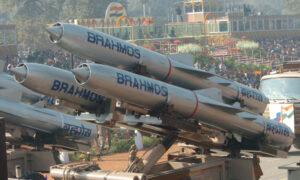
The BrahMos is a joint Indian–Russian supersonic cruise missile program, derived from the Russian P-800 Oniks and operational across land, sea, and air platforms. While officially classified as a conventional weapon, BrahMos’s 200–300 kg payload capacity is consistent with compact fission or boosted-fission nuclear warheads tested by India (~12–15 kilotons under 200 kg, up to ~100 kt under 300 kg). This technical flexibility makes it inherently dual-capable.
| Indicator | Source |
| BrahMos payload (200–300 kg) matches compact fission/boosted warheads; design is inherently dual-capable. | Stimson 2020; BrahMos Aerospace specs. |
| Air-launched BrahMos on Su-30MKI under SFC control — strong nuclear role signal. | Pugwash India brief; APLN commentary. |
| Indian Defence Ministry reported that it signed a US$ 2.36 billion deal to procure “nuclear capable” BrahMos missiles for the Indian Navy | Reuters, March 2024 |
Indicators of BrahMos Dual-Capability
DRDO’s test of a conventional variant of the Agni-5 ballistic missile, a platform historically associated with nuclear delivery, adds yet another layer of ambiguity. Marketed as a “bunker-buster” capable of delivering a 7,500-kg conventional warhead with precision penetrating strikes up to 100 meters, this version of Agni could be used in a decapitating strike, potentially justified as non-nuclear operation to avert nuclear retaliation. Some experts have expressed similar dual-capability concerns about Prahaar and Nirbhay.

Air-Launched Variant: BrahMos-A and the Strategic Forces Command
The BrahMos-A air-launched variant was integrated into modified Su-30MKI fighters starting in 2020, with at least 42 aircraft assigned to India’s Strategic Forces Command (SFC), which is the custodian of nuclear delivery systems. This operational transfer strongly indicates a nuclear role, extending the reach of India’s air-based deterrent far beyond legacy Mirage 2000 or Jaguar gravity-bomb platforms.

The BrahMos-A’s ~450–500 km range from altitude, combined with the Su-30’s combat radius, allows deep standoff strikes into Pakistani territory. The 300 kg payload capacity can accommodate India’s compact nuclear devices, making this the most unambiguous nuclear delivery candidate among BrahMos variants.
Land-Based BrahMos
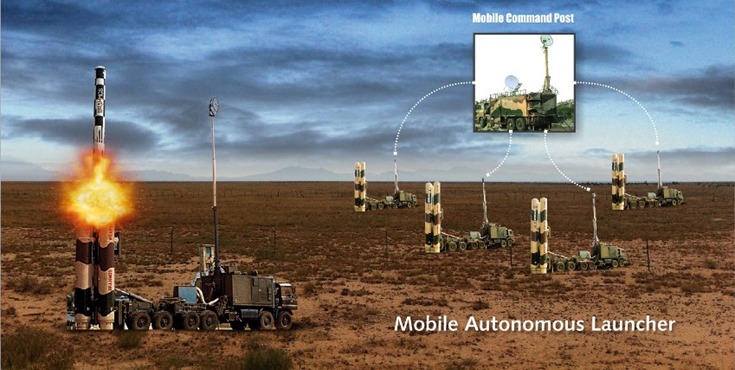
Indian Army regiments have integrated mobile autonomous launchers (MALs) capable of rapid dispersal and strikes on hardened targets. While these units are claimed as conventional, they can be re-tasked for nuclear missions under crisis conditions. The Block-II upgrade’s “deep dive” terminal trajectory and advanced target discrimination features make it suitable for low-yield counterforce strikes against buried bunkers.
Sea-Based BrahMos
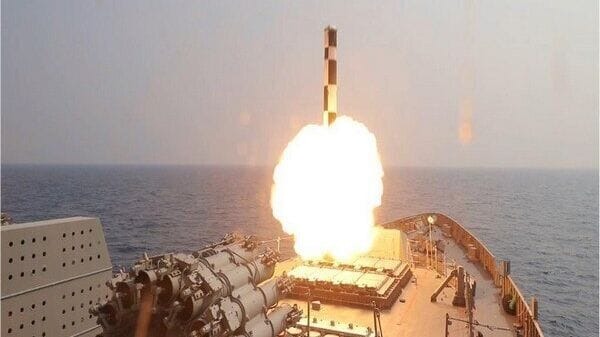
The Indian Navy fields BrahMos on frontline Visakhapatnam-class destroyers, Talwar-class frigates, and other surface combatants. Officially assigned conventional missions, these missiles are nevertheless technically capable of carrying a ~200 kg nuclear payload. While no current public evidence suggests nuclear loading, Cold War precedent with US nuclear Tomahawks shows how quickly a naval cruise missile force can assume nuclear roles if policy shifts.
Doctrinal Implications of Dual-Capability
The integration of BrahMos, particularly the air-launched variant, into nuclear command structures erodes the distinction between conventional and nuclear delivery. In South Asia’s compressed geography, where missile flight times are very short, this ambiguity shortens decision timelines and heightens first-strike incentives. An adversary cannot safely assume a BrahMos in flight is conventionally armed, increasing the likelihood of nuclear retaliation to a non-nuclear strike.
Escalation Dynamics and Counterforce Temptations
The escalation risk posed by BrahMos is not theoretical. In May 2025, during Operation Sindoor, multiple regional and Western reports indicated that India deliberately employed BrahMos missiles in precision strikes against Pakistani military targets. These reports held that strikes penetrated deep into Pakistani territory before counteraction could be mobilised. If accurate, this marked the first operational wartime use of a dual-capable missile in South Asia’s history.
| Indicator | Source |
| 9 Mar 2022: BrahMos violated Pakistan’s airspace; accident claim contested; escalation risk flagged. | FAS; APLN analyses; CISS Strat View. |
| May 2025: BrahMos reportedly used in live strikes (“Operation Sindoor”), crossing a more dangerous line. | Indian Express explainer. |
Incidents & operational precedent
Such an action collapses the “firebreak” between conventional and nuclear domains. In a high-intensity conflict, ambiguity about warhead type would force the adversary into worst-case planning: assuming the missile could be nuclear-armed. Given South Asia’s short missile flight times, this assumption could drive a non-conventional response.
Counterforce Shift
BrahMos’s evolving role suggests India is moving away from its earlier doctrine of credible minimum deterrence toward a counterforce posture, seeking the ability to pre-emptively degrade or destroy adversary nuclear assets before they can be launch. Besides external partnerships in development of real-time ISR and early warning capabilities, this doctrinal shift is reinforced by:
- Integration of dual-capable systems (BrahMos, and now a “conventional” variant of Agni-V) into frontline forces.
- Development of hypersonic BrahMos-II with Mach 6–8 speeds and 1,000–1,500 km range, similar to Russia’s nuclear-capable 3M22 Zircon.

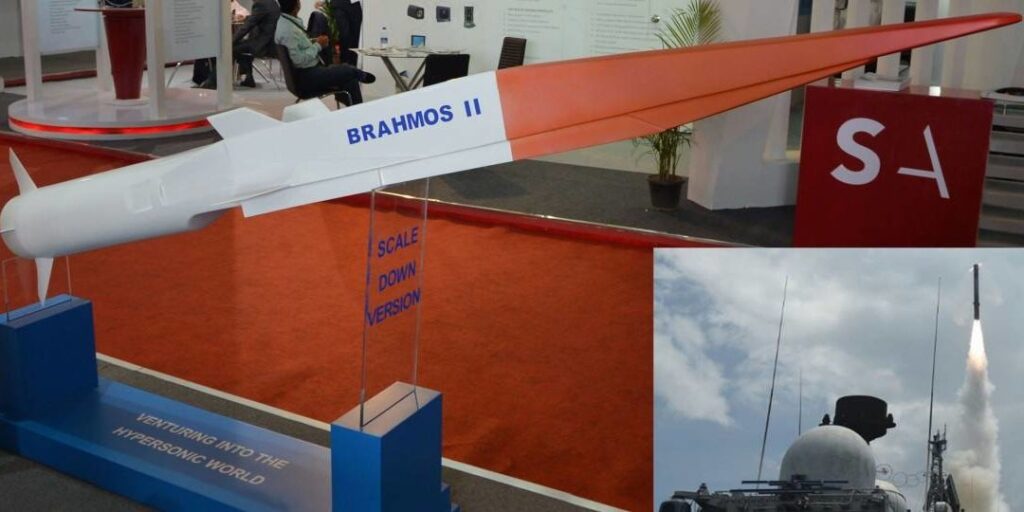

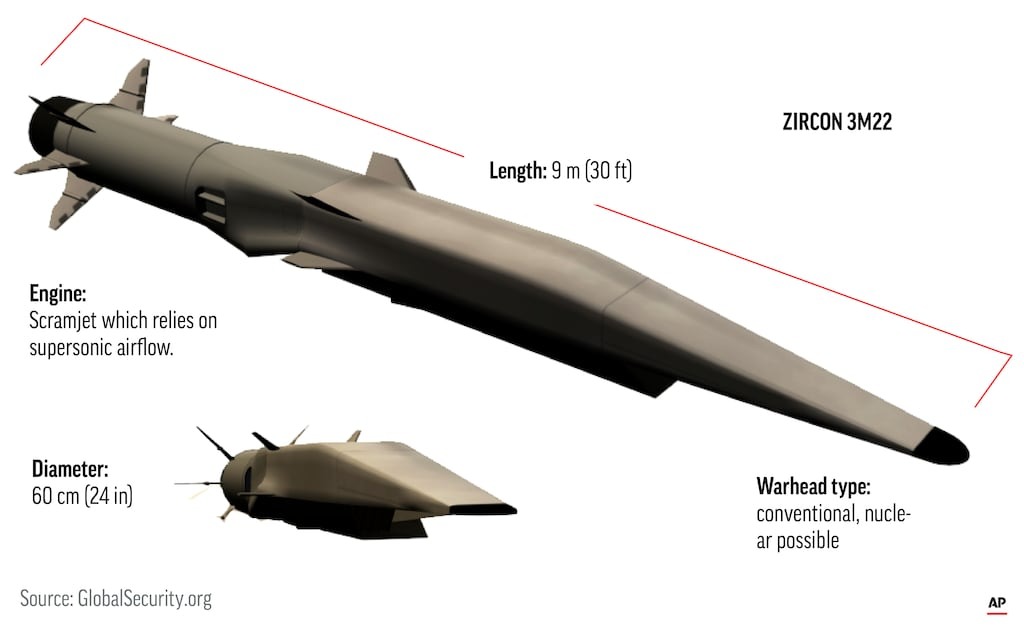
Together, these capabilities lower the technical and operational barriers to conducting decapitating first strikes. While India maintains a declared No First Use (NFU) policy, senior leaders, including Defence Minister Rajnath Singh in 2019, have publicly hinted that adherence will depend on “circumstances”.
The “Use It or Lose It” Pressure
In a crisis, dual-capable missiles on alert, integrated with ISR and potentially hypersonic strike capability, compress decision timelines to minutes. This intensifies the “use it or lose it” dilemma for both sides:
- If Pakistan detects a BrahMos launch from an SFC-controlled Su-30, it cannot rule out a nuclear payload.
- A rational calculation might demand immediate nuclear response to protect retaliatory forces even if the incoming missile is conventional.
This dynamic mirrors Cold War-era US–Soviet concerns but is magnified in South Asia’s much smaller geographical and warning envelope.
AI, NC3, and Emerging‑Technology Risks
A new layer of instability comes from algorithmic upgrades reportedly being explored for BrahMos; route optimisation, automated target recognition, sensor fusion, and real‑time adaptive strike logic. In effect, a system sold and used in operations as “fire‑and‑forget,” is a clear drift toward machine‑assisted employment with shrinking human touchpoints. In South Asia’s compressed warning timelines, even small reductions in human oversight at launch or retargeting can magnify the chance of misclassification and inadvertent escalation.
Across nuclear powers, leading analysts anticipate AI integration into NC3 support functions, from ISR and early warning to decision‑support dashboards and consistently flag decision‑making as the most dangerous locus for AI because it accelerates tempo, encourages automation bias, and reduces deliberation time in ambiguous scenarios. This accelerant effect increases the probability of inadvertent escalation, especially where postures are opaque and dual‑use systems are already entangled with nuclear forces. In short, AI may improve tactical efficiency, but without transparency and guardrails it raises strategic risk. India’s reported wartime operationalisation of Akashteer (an AI‑enabled air‑defence battle management system) during the 2025 hostilities illustrates how fast AI is moving from trials to live employment in South Asian combat environments. If analogous AI logics have fully migrated into BrahMos mission‑planning or retargeting, Pakistan will face an even murkier intent‑detection problem: is a super- or hypersonic ingress a human‑directed conventional strike, a pre‑programmed counterforce shot, or an algorithm‑accelerated nuclear delivery run? The prudent assumption under such uncertainty is to plan for the worst, compressing leaders’ decision cycles and lowered thresholds. The other long-term and practical solution would be to develop matching capabilities and reverse the response dilemma.

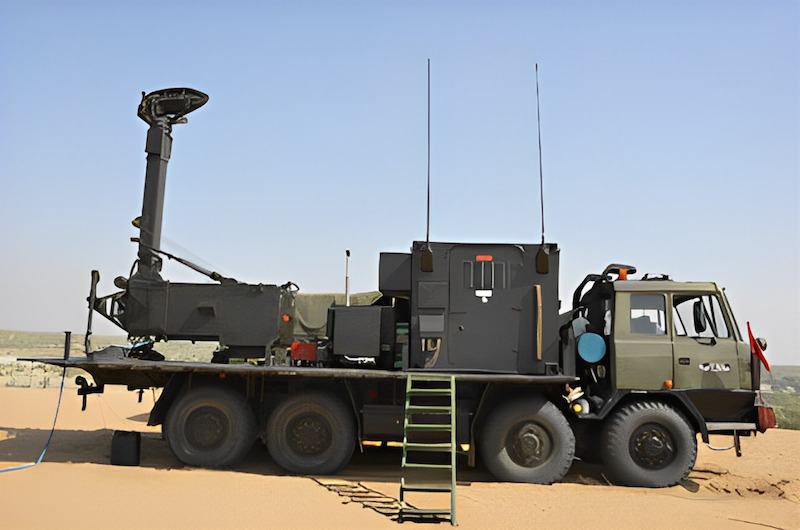
Source: PIB India
Finally, the BrahMos‑II hypersonic programme, often described in Indian sources as a Zircon‑like would further shrink warning time and complicate discrimination of warhead type. Coupled with AI‑enabled ISR and battle management, this trend points toward counterforce temptation under the cloak of conventionality.
Bottom line: AI + dual‑capable missiles + SFC integration = a triad of entanglement that erodes firebreaks between conventional and nuclear operations and materially raises the odds of a mistaken nuclear exchange.In sum, the convergence of AI, dual-capable missiles, and Strategic Forces Command integration forms a web of entanglement that blurs the boundary between conventional and nuclear operations—substantially increasing the risk of an accidental nuclear exchange.
Doctrinal drift, partnerships, and strategic ambiguity
India publicly maintains an ambiguous and conditional NFU. The credibility of the pledge has been eroded by senior‑level caveats and force posture developments. In practice, the operational integration of a dual‑capable BrahMos, especially the BrahMos‑A on Su‑30MKI aircraft assigned to the SFC, blurs the conventional–nuclear boundary and signals a counterforce turn under a cloak of ambiguity. Multiple assessments tie this to a doctrinal shift from “credible minimum deterrence” toward pre‑emptive disablement of an adversary’s nuclear assets.
Two technology trajectories intensify this drift. First, reports of a “conventional” avatar of Agni-V ICBM, which comes atop a missile family associated with nuclear delivery, create a warhead‑ambiguity problem similar to BrahMos: a conventionally armed strike on a high‑value node could be misread as nuclear, compressing decision time and incentivising rapid escalation. Second, the development of BrahMos‑II (projected Mach 6–8, 1,000–1,500 km range) promises even shorter warning and less time to discriminate payload type, especially if paired with AI‑enabled ISR and battle management.
| Indicator | Source |
| NFU credibility in doubt; ambiguity enables counterforce posture. | Rajnath Singh remark (2019). |
| AI entering ISR/decision-support; greatest risk is inadvertent escalation. | Akashteer wartime operationalisation. |
| BrahMos-II hypersonic will compress warning times further. | BrahMos Aerospace. |
Doctrinal and tech trends
This technological arc is enabled by multi-vector partnerships. India’s cooperation with the West, Israel, and Russia has accelerated ISR, early‑warning, and C4ISR gains, which are capabilities that are preconditions for counterforce options. These flows are couched in Indo‑Pacific balancing, yet their downstream effect in South Asia is to lower the technical barriers to first‑strike feasibility. This sentiment was also captured during IISS’ Shangri La Dialogue by European discourse on strategic autonomy and AI/space leadership that indirectly sustains such capability buildups.
Net effect: India’s stated ambiguity (NFU‑plus, counterforce “options,” dual‑use deployments) and external enablers (ISR/C4ISR, hypersonic R&D, AI in battle management) together normalize the presence and potential use of dual‑capable missiles in crisis, making misinterpretation and nuclear exchange more likely.
Four Steps to Untangle
India’s force posture, doctrine and crisis behaviour indicate its lack of interest in strategic stability. However, if it becomes a priority in South Asia, four steps become imperative to address risks associated to the conventional-nuclear entanglement embedded in fielding BrahMos-type dual-capable systems.
One, no‑mixing pledge for dual‑capable systems. India and Pakistan could consider committing that platforms and units under nuclear command will not conduct conventional operations, and vice‑versa; where technically unavoidable, adopt distinct peacetime basing and alerting profiles to aid discrimination. Pakistan has maintained such clarity by clearly stating which missiles are nuclear. For this to be negotiated, India must break the self-imposed dialogue deadlock. Pakistan has been offering a strategic restraint regime to India since 1998 nuclear weapons test. Pakistan, by contrast, has already taken concrete steps to address entanglement concerns by establishing a new Army Rocket Force with its own dedicated command structure to oversee missile deployment during conventional conflict scenarios. Prime Minister Sharif announced the formation of this force on 13 August 2025 night, stating it would be equipped with modern technologies and significantly enhance Pakistan’s combat capabilities. The Army Rocket Force is designed specifically to supervise the handling and deployment of missiles in conventional contingencies, thereby institutionalizing a clear separation from nuclear command arrangements (Reuters, 14 August 2025). To resolve dual-use ambiguities, some Indian analysts have proposed an “Integrated Rocket Force” that separates nuclear and conventional missile roles.
Two, launch‑notification and flight‑testing transparency. Both countries can jointly review pre‑notification agreement for missile tests, which currently includes ballistic missiles only. Pakistan had offered it, India rejected it and now such an arms control measure would be very difficult to negotiate for multiple reasons. Several Track-II initiatives have been proposing this for years now.
Three, AI guardrails for NC3‑adjacent functions. Declare human‑oversight requirements for any AI used in targeting or dynamic re-tasking; adopt red‑team evaluation and adversarial testing norms; exchange incident reporting on AI malfunctions that could affect crisis stability. Pakistan has displayed leadership in REAIM (Responsible AI in Military Domain) and actively participates in Track-II initiatives where AI-nuclear nexus is being discussed in detail. If intergovernmental negotiations cannot be undertaken, Track-II dialogues could fill in the void and work as their dirty-kitchen, offering several menus that could be examined at Track-I. Such third‑party facilitation is an established norm from which South Asia can benefit. IISS, SIPRI, and BASIC have long offered their platforms and could be useful in codifying dual‑use risk‑reduction and data‑sharing (e.g., accident investigation protocols, “algorithmic transparency” briefs at low classification).
Four, hypersonic de‑risking. India could prioritise voluntary flight‑profile transparency and exclusion windows for BrahMos‑II tests. On that basis, both countries could explore a regional moratorium development of hypersonic cruise missiles and AI‑retargetable delivery systems. These measures may sound like a wild-goose chase in prevailing environment but if strategic stability is a common interest, steps like these are necessary.
Conclusion
Since 9 March 2022, the BrahMos has become the emblem of crisis‑by‑confusion in South Asia: a dual‑capable supersonic weapon that has deliberately crossed borders in peacetime and, per multi‑source reporting, was employed deliberately in the May 2025 conflict. Its expanding envelope (air‑, land‑, sea‑based; extended-range and hypersonic trajectories; potential AI‑assisted missioning) and its institutional linkage to India’s nuclear command architecture (SFC‑linked Su‑30MKI) collapse the firebreak between conventional and nuclear strike. In this environment, intent is undecidable at launch; prudent adversaries may assume nuclear and act fast, raising the probability of an inadvertent nuclear exchange triggered by a conventional shot. India’s professed NFU posture is a performative veil for escalation readiness. The BrahMos missile, with its ambiguous payloads, AI-enhanced guidance, and integration into nuclear triad components, exemplifies the shift from deterrence by punishment to deterrence by intimidation. For Pakistan, this signals the need to maintain calibrated strategic ambiguity, reinforce second-strike capabilities and the imperative of developing matching systems. For the world, it is a warning. The next BrahMos launch may not be a test of restraint, it may be a test of survivability.


Brig (R) Dr Zahir Kazmi is the Arms Control Advisor at the Strategic Plans Division.


