

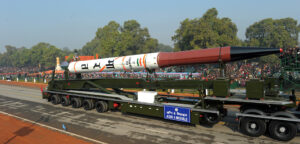



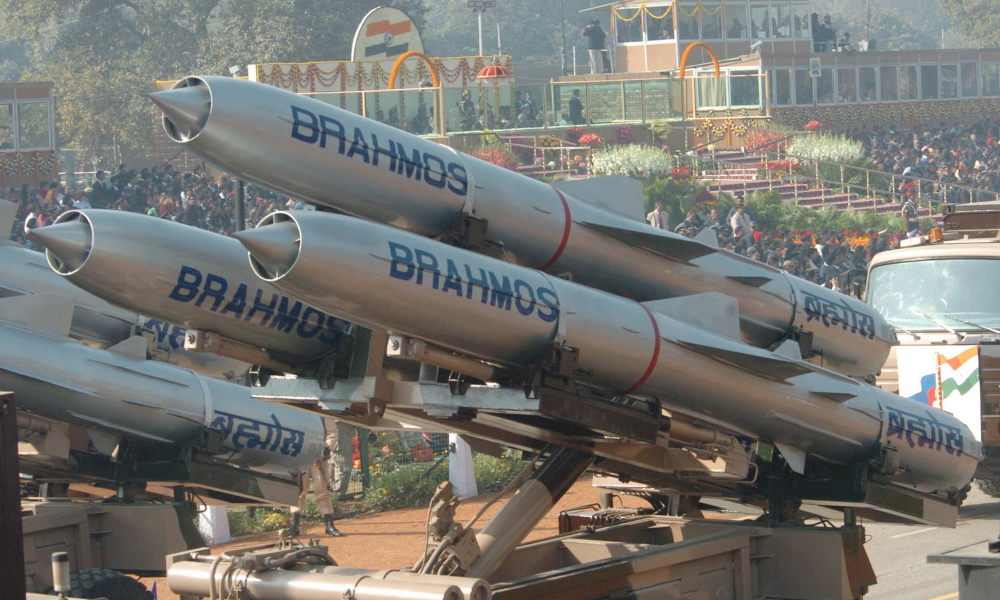
A nuclear-armed state launches a supersonic projectile that tears through the evening silence to achieve Mach 3. Within minutes, the projectile crosses the international border into the airspace of the neighboring nuclear-armed adversary, ultimately to crash into a civilian area. In a world governed by the cold logic of action-reaction, the sequence of events provides a quintessential trigger for a nuclear catastrophe. Nevertheless, on March 9th, 2022, when an Indian dual-capable BrahMos was fired from the Indian city of Ambala and crashed near Pakistan’s town of Mian Channu, the catastrophe was averted not because of the fail-safe feature of the missile, but because of Pakistan’s restraint and highly mature handling of the situation.
Four years later while there is no evidence that the grave flaws in India’s strategic Command and Control (C&C) system, exposed by the “accidental” firing of BrahMos, have been satisfactorily addressed, India has been heading down an even more perilous course. According to the latest assessment by Stockholm International Peace Research Institute (SIPRI), India has placed at least 12 of its nuclear warheads in a ready-to-launch state. Though technological trends in India’s force posture development have long suggested a shift from a recessed deterrence posture, it is the first time that SIPRI has documented India’s deployment of a portion of its nuclear arsenal on hair-trigger alert. India’s shift to a ready-to-launch nuclear posture against the backdrop of its proven-defective C&C architecture arguably poses the most acute challenge to regional and global stability.
A nuclear C&C structure comprises several procedural, technical, and communicative mechanisms to govern the management, deployment, and employment of nuclear forces. Central to nuclear C&C is the always/never dilemma, which—through positive and negative control—covers three dimensions: 1) reliability: nuclear weapons must always function when authorized; 2) safety: the weapons must not be launched without requisite authorization; 3) security: the weapons must be protected against launch by unauthorized people.
To comprehend the acute risks that India’s ready-to-launch nuclear posture entails, it is worth considering the structural flaws in India’s strategic C&C that the 2022 BrahMos firing highlighted. After initially blaming the “technical malfunction” for the “accidental” launch of the missile during “routine maintenance and inspection,” the Indian Air Force (IAF) later sacked three officers after finding them guilty of “deviation from the SOPs.” In March 2024, IAF revealed that the commander of the road convoy responsible for transporting the BrahMos to the inspection site “failed to ensure the safe transit,” besides failing “to ensure disconnection of the combat connectors” from the junction box.
From the initial claim of technical error to the later position of squarely placing the responsibility on the IAF officers, the shift in India’s position is conspicuous. Even if the official version of human error is to be believed, it reveals deep flaws in the safety of India’s strategic C&C. Given that BrahMos is a dual-capable weapon system, the fact that a strategic weapon system could be “accidentally” launched owing to the negligence of the maintenance crew does not just reveal an absence of centralized C&C, but also calls into question the reliability of technical mechanisms—especially negative controls—in India’s strategic C&C. Furthermore, it also casts serious doubts on the professional capacity and reliability of the personnel deputed to manage India’s strategic weapons. If a strategic weapon could be “accidentally” launched during peacetime due to human oversight, the principal assumption that India can flawlessly maintain and handle its strategic arsenal falls apart.
For a few years after its 1998 nuclear tests, India claimed to have adopted a recessed deterrence posture, i.e., its disassembled warheads were kept physically separate from the delivery means. The recessed posture meant that during a crisis, several hours would be required before the weapons could be readied for launch. The physical separation acted as a built-in time buffer, acting as a systemic safeguard against accidental launches and providing the crucial cooling-off period during the crises. However, for more than a decade now, India has been systematically dismantling structural guardrails of separation between the warheads and the delivery means, expanding its canisterization of land-based missiles and arming of nuclear-powered submarines with nuclear-tipped missiles, thus eliminating the vital time buffer. The technological shift in India’s nuclear arsenal compresses the timeline to launch a nuclear strike from hours to mere minutes. Furthermore, during their deterrence missions in the deep sea, submarines are unlikely to be able to maintain constant communication with the central command, which requires pre-delegation of authority to on-board commanders in specific circumstances and contingencies, thus weakening centralized C&C.
The convergence of India’s flawed safety record and its always “ready-to-launch” nuclear arsenal further adds to volatility in South Asia. Given a sizeable portion of India’s land and sea-based missiles are always in a state of hair-trigger alert, human negligence, technical malfunction, or a communication misunderstanding can lead to the “accidental” launch of a nuclear-tipped missile. Once an Indian missile is launched, Pakistan will be able to detect and track a delivery vector heading towards its territory. Considering that India’s force posture has already been tilting towards counterforce, the decision-makers in Pakistan would have only a few minutes to ascertain whether the incoming missile is an accidental launch or the onset of a counterforce attack. Consequently, Pakistan might perceive a “use it or lose it” dilemma for its nuclear arsenal, potentially engendering a retaliatory response and propelling the two nations on a dangerous gallop towards wider nuclear catastrophe.
Furthermore, in the wake of India’s pursuit of Inter-Continental Ballistic Missiles (ICBMs) capable of hitting targets in Europe and North America, the grave risks associated with the potential “accidental” launch of the Indian missiles do not just remain confined to South Asia or Asia but pose a global challenge. An “accidentally” launched nuclear-tipped Indian ICBM can potentially obliterate a city in Europe or North America. India’s nuclear expansion and modernization can no longer be treated as a benign response to regional dynamics. The 2022 BrahMos launch was a crucial (but unheeded) warning shot from a nuclear C&C system already plagued by technical and procedural discrepancies. To mandate the same proven-flawed strategic C&C to handle a “ready-to-launch” nuclear arsenal is nothing but strategic recklessness. The intersection of a flawed nuclear safety apparatus and a ready-to-launch arsenal is a quintessential mathematical formula for catastrophe. As India increases the number of its “ready-to-launch” nuclear warheads, the risk of technical malfunction, human shortcoming, or command miscommunication triggering a catastrophic nuclear war grows exponentially.


Hamdan Khan is a Research Officer at the Strategic Vision Institute (SVI) Islamabad.


