




The United States Secretary of War, Pete Hegseth, was recently asked about the development of intercontinental-range missiles in South Asia at the IISS Shangri-La Dialogue 2026. The questioner referred to the testimony of Tulsi Gabbard, the then United States Director of National Intelligence, in a Senate hearing, who said that Pakistan is developing long range missiles that could hit the American mainland. In the first place, Pakistan has not developed a long range missile capable of hitting the American mainland. Secondly, it is surprising that India has reportedly tested Agni-VI, a 12000 Kilometer range missile that can hit areas of the United States. Why are Pakistan’s missiles, which have far less range, presented as a threat, while India’s missiles, which have been tested, are underplayed by American officials? To this question, the US Secretary of War responded that right now, we (America) are not pointing fingers at the ICBM program of either of them and calling it a threat to the United States. The following article explores myths and realities surrounding long range missile development in South Asia and assesses the future threats of these missiles to America.
Before Pakistan conducted nuclear weapons tests in May 1998 in response to the second series of Indian nuclear tests, Pakistan faced India in three major wars and various border skirmishes. Predominantly, the 1971 Indo-Pak war and the separation of East Pakistan compelled Pakistan’s political and military leadership to conclude that without possessing nuclear weapons, Pakistan could not survive in India’s neighborhood. A conventional superior hostile adversary in the neighborhood would continuously pose an existential threat to it. Therefore, for Pakistan, the primary rationale for developing nuclear weapons was to deter Indian aggression at all levels. Simultaneously, Pakistan’s nuclear use doctrine is also India centric. Even the Director General of Inter Services Public Relations (ISPR), the media wing of the armed forces of Pakistan, and the Foreign Office’s spokesperson have openly stated that Pakistan’s nuclear weapon program is India centric.
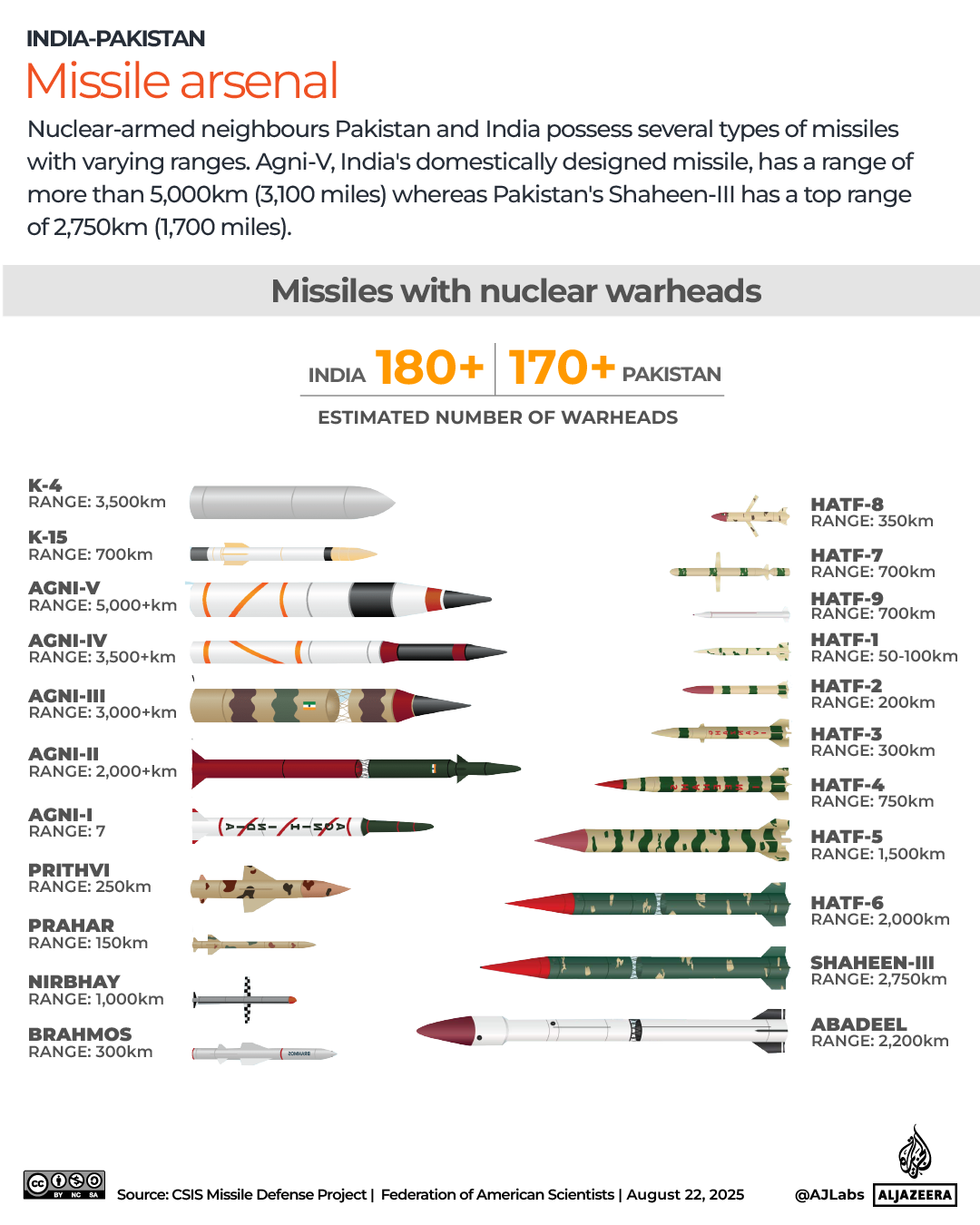
Similarly, Pakistan’s missile inventory is being developed to deter and counter threats from India. Right now, Shaheen III is the longest range missile in Pakistan’s missile inventory. It can travel up to 2750 Km and carry both conventional and nuclear payloads, covering the whole of India up to the Nicobar and Andaman Islands, the farthest land area of India. Pakistan believes that Shaheen III, along with other capabilities, has effectively deterred India from initiating a major offensive and from doing so in the future. Along with that, Pakistan is strengthening its conventional deterrence through effective and credible mechanisms, including raising a Rocket Force Command and modernizing its conventional warfighting capability. This leaves Pakistan with no incentive to develop a missile with a range exceeding 2750 KM. Shaheen III, along with other strategic inventory and conventional warfighting tools, has so far deterred and has the potential to deter future conventional and nuclear aggression from India. Moreover, there is no credible source that has reported Pakistan is developing an Intercontinental range nuclear or conventional missile with a range of more than 2750 km.
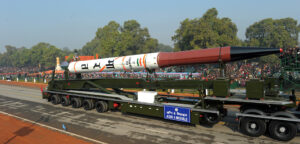
In contrast, India’s nuclear weapon program is prestige driven. The father of the Indian nuclear program, Dr Homi Bhabha, in 1958, declared that India could detonate a device within 18 months if the government gave the green signal. This was said long before China tested its nuclear weapons or Pakistan had even thought of developing a nuclear deterrent. New Delhi actually states that its nuclear weapon capability is primarily aimed at deterring Pakistan and China. However, its missile capability range exceeds its security needs. Right now, India possesses the Intercontinental Ballistic Missile (ICBM) technology. It has tested the Agni-V, with a range of 5000–8000 km. Agni-V can hit every city of Pakistan and most military and industrial centers in mainland China. However, recently, the chief of India’s Defence Research and Development Organisation (DRDO), Sameer V Samath, in an interview, was asked when Agni-VI would be operational. The DRDO chief responded that it’s the government’s decision, but we (DRDO) are already ready for this. Interestingly, a few months after this interview, in May 2026, India tested an Agni series missile, and it is alleged that it was the Agni-VI missile.
The test was conducted near Chandipur from the Integrated Test Range along Odisha’s coastline. The missile covered a range of more than 3500 km. Though no official source commented on the test, however the test day coincided with Operation Sindoor’s first anniversary. The analysts believe that it was an Agni-VI ICBM test, which could carry a payload of 1.5 to 3 tons to 12000 KM. If launched from either the West side or the East side of India, this missile can easily hit parts of Europe and the American mainland, including a few of America’s big states. So, in reality, India not only possesses ICBM technology but also has tested technology that could hit the American mainland, whereas Pakistan is neither developing nor intends to develop an ICBM. Therefore, the debate surrounding long range missile development in South Asia is based on political assumptions rather than objective reality.
It is important to note that in international politics, there are no permanent enemies or friends; only national interests determine whether a state is a friend or an enemy. In history, it has been observed that the worst of enemies have become good friends within a few decades and strategic partners have become worst enemies. During the last two decades, the US and India have been on the same page due to converging strategic interests in the Asia-Pacific. With the changing global geopolitical landscape, the American approach to the region has shifted. American interests and priorities in the Asia Pacific are not the same as they were two decades ago. If these interests continue to change further over time, then US-India relations might not remain the same as they were during the last two decades. Therefore, capabilities developed today should be assessed not only in terms of the present day geopolitical realities but also through the uncertainties of the evolving future strategic environment. Today, if India advances its missile ranges, particularly those beyond its regional deterrence requirements and could reach major parts of Europe and the US, it should not be ignored. Washington must realize that national security assessments must consider capabilities, intentions and the possibility of changing geopolitical dynamics. Strategic realities remain beyond transient partnerships and the missile ranges matter regardless of the political relationship of the moment.


Fakhar Alam is Research Officer at the Center for International Strategic Studies (CISS) Islamabad.


