
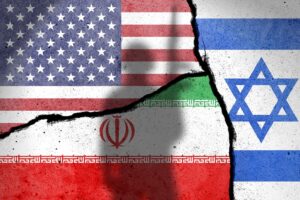



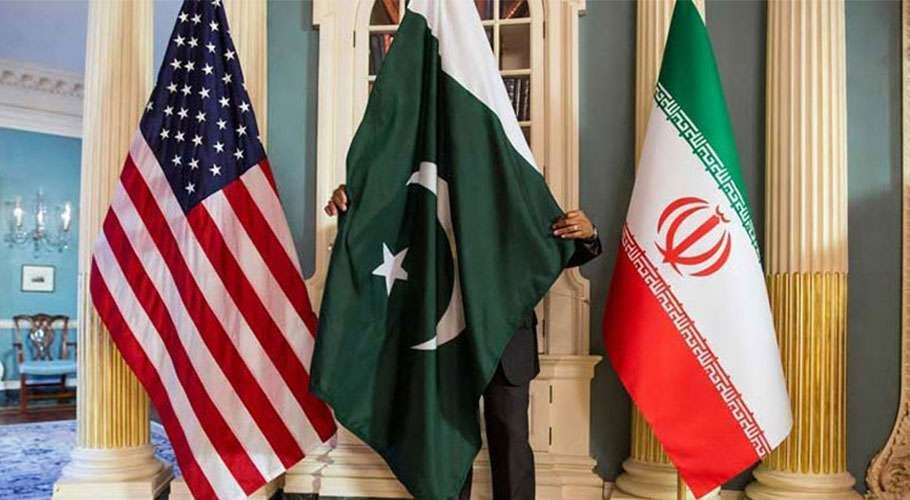
Pakistan is facilitating communication between the U.S. and Iran, both of which are refusing to engage in direct talks amid a growing military conflict. With the help of Pakistan and Qatar, both states went to Switzerland to stop this conflict between them and reach a settlement. The talks were on the “Islamabad Memorandum of Understanding” that was signed in June this year. The relationship between Pakistan and the U.S. had recently warmed prior to this occasion. Earlier in May 2025, the U.S. brokered a ceasefire to avert further escalation in the May 2025 India-Pakistan war. Islamabad acknowledged Washington’s role but New Delhi has disputed the role of U.S. involvement for peace in the region. Pakistan’s Army Chief Field Marshal Asim Munir, in particular, seem to have left a positive impression on Donald Trump, with the US president repeatedly praising him as a “great fighter,” “an exceptional human being” and “my favorite field marshal.”
The world knows Pakistan as a “major non-NATO ally” of the U.S., along with a history of longstanding security cooperation in the region. Pakistan has been tested as a security partner by the U.S. This peace agreement between the U.S. and Iran has finally materialized with Pakistan’s help. To understand Pakistan’s role as a global mediator, one has to go back to the history.
In 1971, Henry Kissinger flew into Islamabad and quietly slipped into Beijing with Pakistan’s help. The relationship between the U.S. and China had been strained, ever since the birth of the People’s Republic and President Nixon was looking for an opportunity to open a strategic dialogue to counter Soviets’ influence. A channel was offered by Pakistan, which had recognized the People’s Republic of China in 1951. President Yahya Khan acted as a go-between for President Nixon and Chinese Premier Zhou Enlai. On July 9, 1971, Kissinger secretly boarded a Pakistan International Airline (PIA) flight from Rawalpindi to Beijing leading to his talks with Chinese leaders. Pakistan played a pivotal role in bringing about a historic opening between the U.S. and China, which Kissinger later described as a “tectonic shift in the global balance of power.”
Pakistan was not at the table in 2019 for the U.S.-Taliban peace talks in Doha, but it brought the Taliban to the table. The U.S. was ready to come out of the war and the Taliban were not in a position to deal directly with the U.S. without a trusted third party. Pakistan, which had historical ties with the Taliban leadership, used its influence to push the group towards talks. All stakeholders were receptive and appreciative of Pakistan’s facilitation in this matter. By December of that year, U.S. envoy Zalmay Khalilzad was flying between Qatar and Pakistan, which were coordinating behind the scenes.
In 2025, when Trump’s Gaza peace plan encountered resistance and Qatar stepped back from its mediating role, Pakistan quietly stepped in through the back channel. Pakistan was consulted on the plan -the U.S. president unveiled the proposal after consultations with leaders of eight Muslim countries, including Pakistan. Deputy Prime Minister Ishaq Dar announced that Islamabad had put forward proposals which were partially incorporated into the final draft.
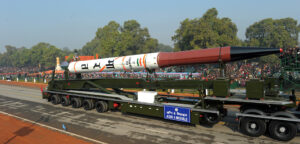
The pattern is always the same. If countries can’t talk, Pakistan does. The foundation of this pattern was laid over decades for its story of survival and will power. Then Foreign Minister Zulfikar Ali Bhutto said in 1965 that if India developed the nuclear bomb, Pakistani would eat grass or even go hungry, but it will get one of its own. The nuclear test conducted by India in 1974 for prestige, dubbed “the peaceful nuclear explosion,” and the traumatic war of 1971, which resulted in the secession of East Pakistan, solidified Pakistan’s resolve to build a nuclear weapon. Pakistan reached its target for survival by the end of the 1990s and became the sole Muslim-majority nation and a mature leading state to have nuclear weapons. Not built for supremacy, but to make Pakistan safe, undefeatable and protected against future Indian aggression. If a state has nuclear weapons, the cost of excluding that nuclear weapon state from regional crisis becomes too high. Pakistan is not a powerful nation in the conventional sense, it is an indispensable nation. Islamabad coupled this capability with mature, and responsible conduct in an unstable region.
The other aspect of Pakistan’s nuclear program that is not often talked about is how it dealt with the Indian military escalation despite international sanctions against it. Under such harsh circumstances, Pakistan took a middle course: it maintained relations with both opposing sides of the fence, with the U.S., China, the Gulf states and Iran all at once. Even in the 1990s, Pakistan formally proposed a nuclear-weapon-free zone in South Asia and mutual ban on explosive testing, a gesture of peace and friendship in the region, which was received by India skeptically, but helped Pakistan’s credibility as a mature and responsible stakeholder. This stance enabled Pakistan to keep its relations with all parties alive, a rare occurrence in a region characterised by rivalries. Since then, when a conflict arises, Pakistan is one of the few countries is trusted by both sides of such a conflict, and was praised to move back and forth between them without losing access to either side.
Pakistan’s role is a silent, neutral, and predictable one, good at hosting conversations among competing states. Civilian diplomacy, responsible nuclear power and military relations spread across the global blocs, all running simultaneously. While the civilian government maintains communication with Tehran, Trump speaks directly with Pakistan’s army chief. Together they help each other. In the meanwhile, Pakistan holds both sides of a conversation that cannot be officially conducted through any single state channel. Pakistan isn’t merely a peacemaker. It has an infrastructure and architecture that allows for conversation when official lines are closed. The country of 250 million people that made itself essential to the system, without being loud, or powerful. The only country that can move between the warming sides, never leaving them alone. When the world sleeps Pakistan keeps awake for peace, and when Pakistan talks the world listens.

Mr Muhammad Ali Baig is Research Officer at the Center for International Strategic Studies (CISS), Islamabad.


