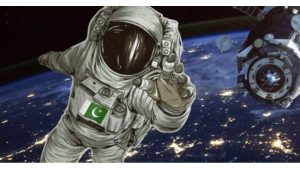


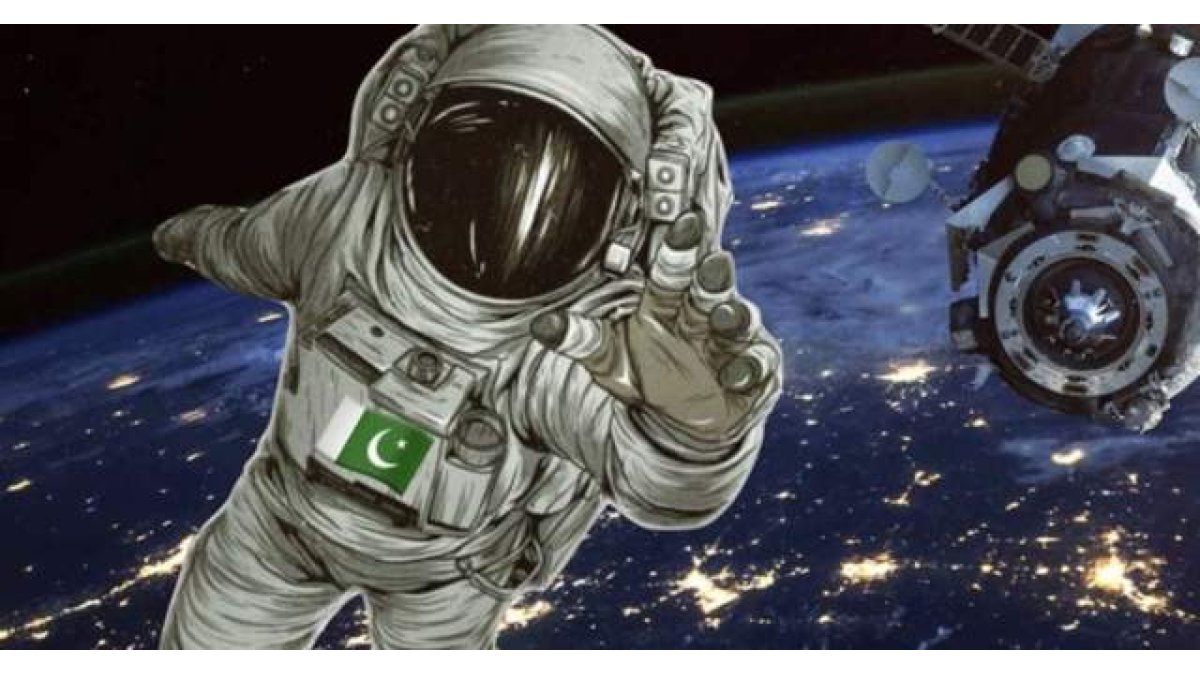
Muhammad Zeeshan Ali is the first Pakistani national to reach Earth orbit and the first foreign astronaut to enter China’s Tiangong space station as a payload specialist on the Shenzhou-24 mission on November 25, 2026. This is an epochal moment for Pakistan as it enters a new phase of its space journey beyond launching satellites. The Pakistan Space and Upper Atmosphere Research Commission (SUPARCO) and the Chinese Manned Space Agency (CMSA) authorities signed a bilateral agreement that calls for the selection and training of Pakistani astronaut candidates, alongside their mission to board Tiangong in February 2025. Two candidates were selected for training in China, Muhammad Zeeshan Ali (who was eventually selected for the flight) and Khurram Daud. Zeeshan Ali’s involvement puts Pakistan at the forefront of China’s crewed spaceflight programme, making it the first foreign partner to join the programme. This depicts that long-term Pakistan-China cooperation has moved beyond the skies.
The mission is an epic example of successful scientific diplomacy of Pakistan. It has a unique position as the first foreign partner in a Chinese crewed mission. It broadens the scope of bilateral cooperation beyond Earth and in advanced research, technology, and peaceful space exploration. Human spaceflight also enhances the international scientific image of Pakistan. Access to infrastructure, technical knowledge, and research opportunities is still limited to a few countries. It can enhance the significance of Pakistan in the international forums of space and build opportunities for more partnerships. The challenge is to make the milestone part of a bigger Pakistani space programme.
Pakistan’s human spaceflight mission opens new avenues for advanced scientific research, strengthens national scientific and technological capabilities, inspires national confidence, and elevates Pakistan’s stature in international scientific cooperation and diplomacy.
Among the most crucial aspects of the mission is its contribution to science. As a payload specialist, Ali is participating in experiments that are conducted at the Chinese space station. He is working on four major experiments. First, he will conduct research on designing a lightweight Hybrid Composite Shield based on graphene. Second, he will investigate self-healing carbon fiber composites. Third, he will investigate the impact of microgravity and cosmic radiation on the longevity, genetic characteristics, and nutritional value of quinoa seeds to see if it is a viable food option for future space missions. Finally, he will work on the cultivation of microalgae and cyanobacteria in space to support sustainable life-support systems by regenerating oxygen, removing carbon dioxide (CO₂) and possibly producing food. The mission provides a chance to improve research in life sciences, biotechnology, materials science, aerospace engineering and microgravity studies.
The legacy of the astronaut programme may be its impact on the development of indigenous scientific and technical human resources. Astronauts are not the only ones who sustain human space flight; interdisciplinary experts are involved in space missions. It calls for engineers who create spacecraft systems, scientists for experiments, medical experts for research in space on human living , and technicians that looks after maintenance of its complicated infrastructure.
The mission will encourage Pakistan to develop a bigger professional pipeline. It will stimulate the development of special programs, research collaborations, and hands-on training programs in space science and related areas in universities and research institutes. A trained generation of astronauts can give any country some sort of space exploration capability and bring Pakistan closer to National Space Vision 2047.
There are also other consequences of space research; it has a spillover effect on sustainable development on Earth. The value-added knowledge and technologies for complex space missions can be applied to terrestrial missions as required. Space science and technology applications in agriculture, water management, climate monitoring, disaster management, and communications are already available. These benefits are not necessarily provided by human spaceflight, but a greater scientific ecosystem can help to promote the nation’s general ability to carry out research, innovation, and technological adaptation. The problem is to associate scientific investment with the national developmental needs, not to consider space exploration as an isolated prestige project.
For future, Zeeshan Ali has rightly pointed out, “what comes after this flight is more important than the flight itself.” Right now, sustaining this success is possibly the most significant factor for Pakistan space programme. The mission should not be a one-off success or become a moment for celebration for the nation. It needs to be integrated into a coherent, well-supported human spaceflight programme in line with Pakistan’s broader space aspirations.
Such like initiative will involve continuity in training of astronauts, provision of further opportunities for Pakistani specialists to contribute to future missions, investment in an indigenous research base, better collaboration between universities and SUPARCO, and private participation. It also demands a clear institutional plan for transferring knowledge and expertise acquired in international cooperation to indigenous knowledge and technology. Pakistan’s involvement in China’s planned Chang’e-8 lunar mission with its indigenous lunar rover in 2028 affords another chance to advance the broader path of cooperation and scientific engagement. In a nutshell, the goal is not merely about the number of Pakistani astronauts who go to space and measure the progress made. The goal should be to establish scientific, technical, and institutional capacity of Pakistan to design experiments, develop technologies, train specialists, and make meaningful contributions to future missions.

Areesha Manzoor is Research Assistant at the Center for International Strategic Studies (CISS), Islamabad.