





The recent ruling of the Permanent Court of Arbitration (PCA) denouncing the Indian attempt at turning water into an instrument of political coercion is a moment of both diplomatic victory as well as alarm for Pakistan. On 31 August 2026, the PCA ruled that New Delhi’s decision to place the Indus Waters Treaty (IWT) ‘in abeyance’ did not suspend its legal obligations, asking India to suspend work on a hydro project in Indian Illegal Occupied Jammu & Kashmir (IIOJ&K) and uphold the treaty with Pakistan.
Though the Hague ruling is a reaffirmation that international treaties cannot be suspended unilaterally for political convenience, New Delhi’s rejection of the verdict and labelling the arbitration body as illegal set a dangerous precedent. This development, practically, is more serious than the traditional Pakistan-India rivalry. If a state suspends a water-sharing treaty, whenever political relations deteriorate, other states can follow suit, making transboundary river agreements around the world more vulnerable than ever. India’s position, therefore, is alarming for Pakistan as well as for the international water governance. It is a legal setback for New Delhi’s IWT-position, given India is officially a member of this intergovernmental court.
The ruling is crucial as it does not merely deal with a technical dispute over a hydroelectric project. Rather, it supports Pakistan’s long-term position that water cannot be used as a weapon by directly challenging Indian efforts at using IWT as an instrument of political pressure against Islamabad. By ordering interim restrictions concerning the Kishenganga Hydro-Electric Plant (KHEP) and the Ratle Hydro-Electric Plant (RHEP), the ruling gives a clear message that India cannot unilaterally rewrite international agreements. In addition to terming the Indian move illegal, the ruling also dismissed Indian justifications for suspending the treaty.
It may be recalled that New Delhi had blamed Pakistan for sponsoring a terror attack in IIOJ&K’s Pahalgam in April last year, following which it had suspended the treaty. Pakistan had offered India to conduct neutral investigation, an offer Delhi had flatly denied. Neither did India provide any ‘solid’ proof, nor did any independent international intelligence agency corroborate Indian claim that there was a direct link of the gunmen with personnel inside Pakistan. The PCA ruled that it “examined the potential grounds upon which India could suspend or terminate the treaty, including the grounds cited by India in its public statements”. It further added that in ‘a unanimous decision, the court found that none of these grounds could justify suspension or termination of the treaty.’ It is, therefore, reassuring for Pakistan and for the international water governance in general that any unilateral justification cannot survive legal scrutiny.
The suspension of treaty is alarming for Pakistan as its dependence on the Indus river systems for agriculture, food security, and its wider economy is enormous. Water security is national security for Pakistan. Neither of the two states partying to it can unilaterally suspend the treaty. Therefore, Indian suspension of the commitment raises a fundamental question about its adherence to rule-based order. New Delhi often presents itself as a responsible rising power committed to democracy and international law, yet behind the façade, there lies a striking contradiction. By rejecting an international dispute-resolution mechanism when its ruling is unfavourble, India’s diplomatic rhetoric and practical conduct show a stark disparity.
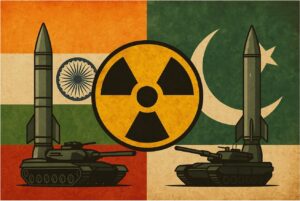
The IWT has historically survived wars and crises between the two nuclear-armed rivals. Former United States (US) President Dwight Eisenhower termed it as ‘one bright spot … in a very depressing world picture that we see so often.’ The treaty’s success was precisely what made it a shining example of functional cooperation between Pakistan and India. By placing it in abeyance, New Delhi has threatened one of the few remaining institutional mechanisms that successfully survived the bilateral discord. As India’s ongoing military modernisation and evolving force posture already undermine strategic stability of South Asia. Now New Delhi’s fresh refusal to recognize an adverse ruling risks weakening the very international legal architecture that safeguards and protects states from unilateral unprovoked aggression. Rather than responding to India’s ‘abeyance’ declaration through escalation, Pakistan sought the route to an internationally established legal mechanism under the IWT.
This is not a new position of Islamabad. When India suspended the IWT in April last year, Barrister Aqeel Malik, the minister of state for Law and Justice, underlined three legal international actions at Pakistan’s disposal to counter Indian illegal unilateral move. One of them was raising the issue at the World Bank, which is the bilateral treaty’s facilitator. The other legal options on the table were reaching out to the Permanent Court of Arbitration or at the International Court of Justice in The Hague, where Islamabad could claim that India has violated the 1969 Vienna Convention on the Law of Treaties. This position strengthens Pakistan’s official stance that it prefers law, arbitration, and diplomacy over unilateral coercion. The latest PCA ruling provides an opportunity for Pakistan to internationalise the principle of not holding transboundary rivers hostage to bilateral tensions, not merely the IWT as a bilateral dispute. It should rather frame it in a broader context, like no upper or middle riparian state should be allowed to weaponise transboundary rivers against downstream states. This framing would give Pakistan a stronger diplomatic and normative argument. India may possess the geographical advantage of being the upper riparian over Pakistan, yet this precedent can be used against India by its upper riparian state as well. The message should be clear that geography does not confer a legal right to weaponise water and that there are various pitfalls that do not allow coercive actions.


Mr Mobeen Jafar Mir is Research Officer at the Center for International Strategic Studies (CISS), Islamabad.


